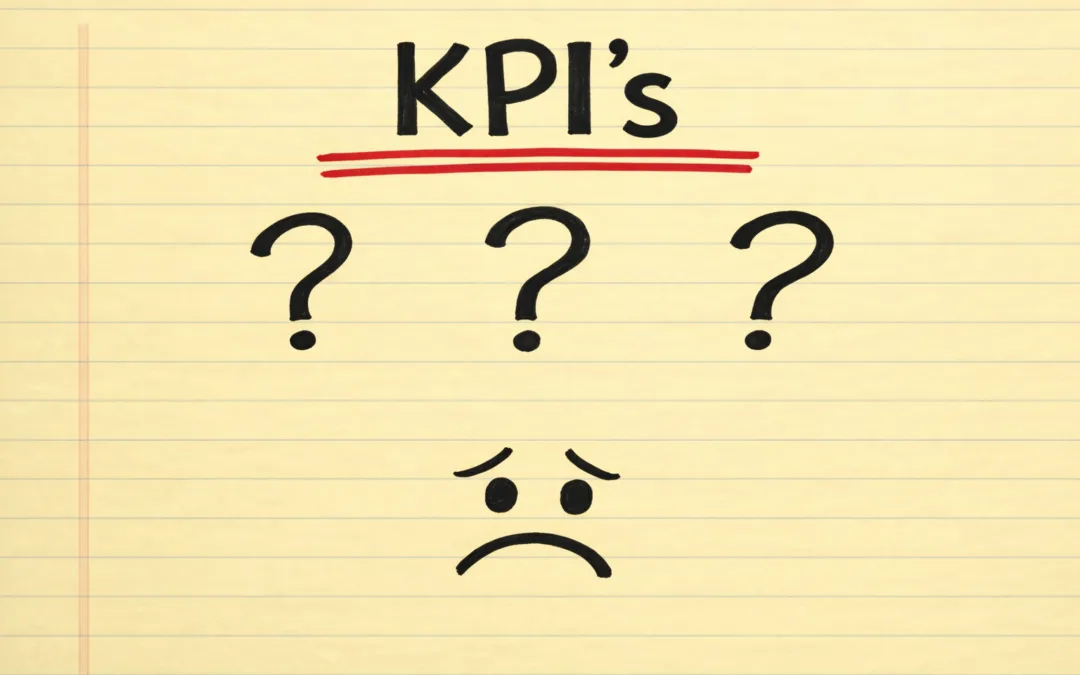
How will it help us make a better decision?
Just because you can measure something does not mean that you should. I was part of materials planning team for a Tier One automotive supplier and I remember our department having a “one-page” scorecard for all our key performance metrics (KPIs).
The problem was there were sixty-four (that is correct – 64) metrics squished onto one letter-size page. It was double column with headings (even a couple of micro-graphs) and a tiny bit of white space, but it required very skinny margins (none?) and a 9-point font size.
It is fine to begin to measure something interesting for a few weeks to assess value, but then be ruthless asking: “Is it providing actionable information to whom and how?” I suspect that the overwrought dashboard kept adding metrics because something bad happened (or almost happened) so another “preventative” metric was created, and after years the list of “KPI’s” was out of control.
If everything is important…
…then nothing is important. Clearly sixty-four KPI’s are too many, but then what is the optimal number of KPI’s? It depends. The dashboard display of a car provides a common reference point – speedometer, fuel gauge, engine temperature gauge, and 4-5 critical warning lights, so 7-8. I personally do not like dashboards with more than 6-8 KPIs. Beyond that, it usually means we moved upstream or downstream KPIs that belong elsewhere for ownership and accountability.
Good books for insights on metrics
Below is my brief list of books helpful in developing good KPIs:
- One Page Management and separate workbook (no longer in print) by Khadem and Lorber – an oldy but a goody – just short, tangible, and practical tools based on Ken Blanchard’s The One Minute Manager.
- The 4 Disciplines of Execution by McChesney, Covey, & Huling – if you only read one of these books this is the one – unless you are a sales leader then see further below.
- Freedom from Command and Control by John Seddon – not the easiest read (it is like an all-protein diet), but he was a vocal critic of the problems of simply bringing a lean manufacturing approach into service and office operations. He also helped me understand how metrics can and will drive unintended behaviors. (Old video interviews available online may be NSFW based on language but are insightful and entertaining. 😊)
- Cracking the Sales Management Code by Jordan & Vazzana – a necessary read if you are a sales leader – measurable activities influence specific objectives that in turn yield desired results. E.g., a 15% sales growth goal is a lagging result, but what are the leading activities and critical objectives to achieve desired outcomes?
- Traction: Get a Grip on Your Business by Gino Wickman – I wish I had read this book years ago, but sadly I only just read it in the past year.
I can help you optimize your metrics and dashboards, providing actionable information to make better decisions and achieve better results.
This blog was written without AI assistance other than MS Editor and edits from Katherine Nyboer (https://www.linkedin.com/in/katherinenyboer/). The image is AI generated.